Varsani Lab - the viral kind
We are a wild 'viral' molecular virology research group that works across ecosystems studying viral dynamics.
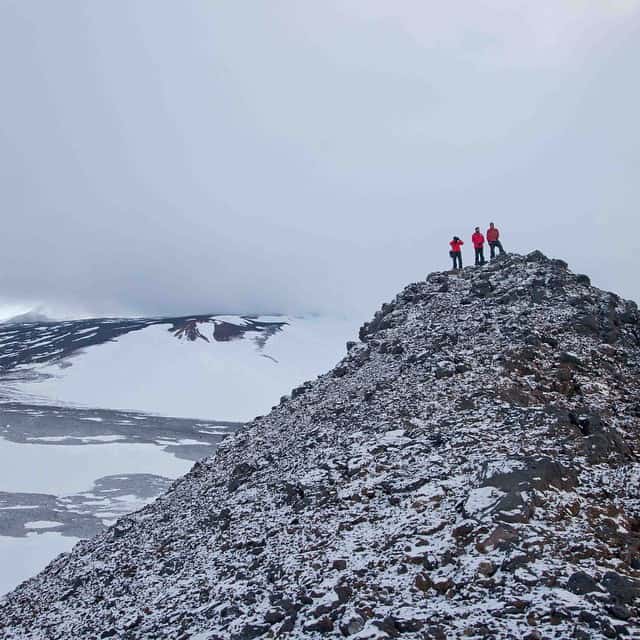
Our broader objectives are to
- Study viral dynamics in Ross Sea (Antarctica) ecosystem which is recognised as anthropogenically the least-altered marine system on the planet with no evidence indicating introduction or range expansion of any species thus far, despite its changing physical environment.
- Unravel the viral evolutionary dynamics as a consequence of climate change.
- Study viral ecological interaction networks within a microbiome to unravel the dynamics of pathogen emergence.
Arvind Varsani
I am a molecular virologist who works across ecosystems from plants to animals and from the tropics to the Antarctic. My research uses a combination of traditional virology, microscopy (including transmission electron microscopy), molecular and cellular biology techniques in conjunction with modern sequencing techniques, synthetic biology and bioinformatics to characterise viruses and understand their dynamics.
Arizona State University, Tempe, USA
6/2023 - current: Professor at the Biodesign Institute and School of Life Sciences
07/2016 - 6/2023: Associate Professor at the Biodesign Institute and School of Life Sciences
University of Canterbury, Christchurch, New Zealand
02/2009 - 07/2016: Senior lecturer / researcher in School of Biological Sciences
University of Cape Town, Cape Town, South Africa
07/2003 - 09/2008: Lecturer in the Structural Biology Research Unit
University of Cape Town, Cape Town, South Africa
1998 - 2003: PhD in Molecular and cell biology
Loughborough University, Loughborough, England
1993 - 1997: BSc, DIS in Medicinal and Pharmaceutical Chemistry


Publications
Relatedness of Gardnerella prophages and their endolysins
bioRxiv [Preprint]. 2026 Sep 29:2026.09.28.754664. doi: 10.64898/2026.09.28.754664.ABSTRACTThe Gardnerella genus includes a complex sub-taxonomy of bacterial species and subgroups which have been implicated in bacterial vaginosis. We analyzed G. leopoldii, G. swidsinski, G. piotii , and G. vaginalis genomes available in public databases and predicted proviral sequences using Cenote-Taker3. We clustered 266 prophage sequences into 140 … Read more
ICTV Virus Taxonomy Profile: Bacilladnaviridae 2026
J Gen Virol. 2026 Sep;107(9). doi: 10.1099/jgv.0.002321. ABSTRACT Bacilladnaviridae is a family of viruses with single-stranded, circular DNA genomes that range from 3.4 to 6 kb and contain a short double-stranded region of 0.5-1 kb. The genome is replicated by the rolling-circle mechanism. Bacilladnavirids encode a jelly-roll capsid protein which forms non-enveloped icosahedral capsids with … Read more
New Parvovirus and Other Swab-Associated Viruses Identified in the Eurasian Goshawk (Astur gentilis)
Pathogens. 2026 Sep 5;15(9):942. doi: 10.3390/pathogens15090942. ABSTRACT Cloacal swabs were collected from 12 Eurasian goshawk chicks during routine veterinary inspections to evaluate the gut-associated virome of goshawks used for falconry. The material was used for metagenomic screening with high-throughput sequencing. Sequences belonging to several viral families (Poxviridae, Circoviridae, Anelloviridae, Retroviridae, Parvoviridae and Astroviridae) were detected … Read more
Identification of aviadenovirus and dependoparvovirus in an Adélie penguin fecal sample from Cape Royds (Ross Island, Antarctica)
Arch Virol. 2026 Sep 4;171(10):268. doi: 10.1007/s00705-026-06726-x. ABSTRACT Adenoviruses (Adenoviridae) and their associated replication-deficient dependoparvoviruses (Parvoviridae) are recognized as significant components of the avian virome. While well-studied in domestic birds, these viruses remain underexplored in wild Antarctic birds. Information is limited on viruses circulating in penguins, particularly outside of the Antarctic Peninsula Region. Here we … Read more
Genomes of cressdnaviricots and phixviricots in a freshwater lake sample from Arizona, USA
Microbiol Resour Announc. 2026 Aug 28:e0092026. doi: 10.1128/mra.00920-26. Online ahead of print. ABSTRACT A viral metagenomic analysis of a 40 ml water sample from a small freshwater lake near Flagstaff, Arizona, USA, resulted in the identification of 295 circular viral genome sequences. Of these, 126 are members of Cressdnaviricota and 169 of Phixviricota phyla. PMID:42663468 … Read more
Effects of Nutrient Limitation on Antarctic Microbial Community Diversity, Composition, and Interactions: A Cryoconite Microcosm Study
Microorganisms. 2026 Aug 16;14(8):1807. doi: 10.3390/microorganisms14081807. ABSTRACT Dry, harsh, nutrient-limited environments such as the McMurdo Dry Valleys, Antarctica, may be particularly susceptible to changes in nutrient availability, demonstrating strong deterministic community assembly processes shaping communities within an ecosystem largely dominated by stochastic processes. Utilizing previously characterized cryoconite hole sediments from Canada Glacier in Taylor Valley, … Read more
